$content.Image.resouceAlt

History

We have supported Italy’s growth since 1850, leveraging postal savings to accompany the country’s economic and social transformation.

  • The Foundation of CDP and the Unification of Italy

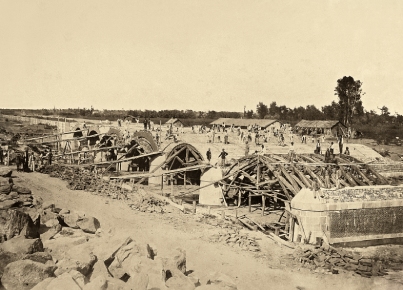
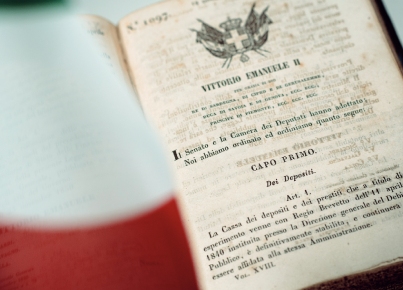
    Established on 18 November 1850 by the Parliament of the Kingdom of Sardinia, Cassa Depositi e Prestiti was created to promote savings and finance public-interest projects. From the outset, Camillo Benso di Cavour recognized its potential, fostering its development as a tool for the country’s modernization.

    Following the Unification of Italy in 1861, CDP progressively expanded its scope of activity, contributing to the country’s economic and infrastructural integration. Its headquarters followed the movement of the capital—from Turin to Florence and finally Rome—while the 1863 reform strengthened its national role by harmonizing existing structures.

  • The Birth of Postal Savings and the Modernization of the Country

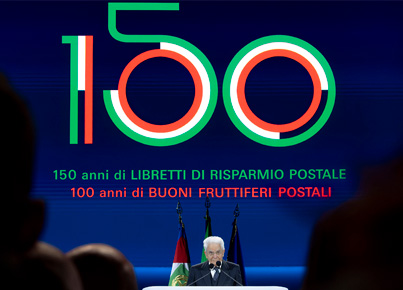
    With the introduction of postal savings passbooks in 1875, Cassa Depositi e Prestiti strengthened its role in mobilizing national savings under a State guarantee. Postal savings expanded the institution’s financial base, enabling it to contribute to public debt management and to the development of infrastructure, schools, and waterworks throughout the country.

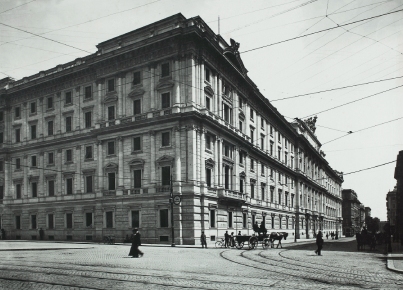
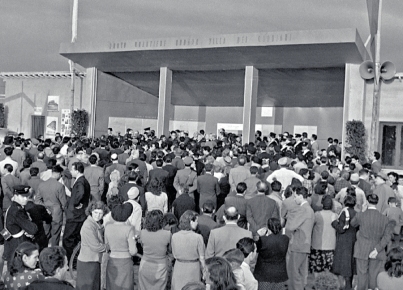
    At the beginning of the twentieth century, CDP established itself as a “model administration,” showcasing its activities through dedicated pavilions at international exhibitions in Europe and the United States (Paris 1900, St. Louis 1904, Milan 1906, London 1909, San Francisco 1910, Turin 1911). In 1910, it inaugurated its new headquarters on Via Goito in Rome

  • The First World War and the Birth of Postal Savings Bonds

    During the First World War, Cassa Depositi e Prestiti played a central role in supporting the State’s finances, contributing to debt placement and financing public expenditure.

    In the post-war years, savings collection grew further, and with the introduction of Postal Savings Bonds in 1925, CDP expanded its fundraising instruments, making saving accessible even to small investors, attracted by high returns and the possibility of redeeming their bonds for cash at any time.

  • Supporting the Public Economy During the Crisis and the Second World War

    The growth of postal savings, further encouraged by Postal Savings Bonds, strengthened CDP’s fundraising capacity and importance within the financial system. 

    CDP supported the country during a period of crisis not only by contributing to public debt management, but also by fostering the creation and development of strategic institutions such as the Istituto Mobiliare Italiano (IMI) and the Istituto per la Ricostruzione Industriale (IRI). 

  • Reconstruction and Infrastructure Development

    In the post-war period, CDP played an essential role in rebuilding the country and helping stabilize public finances. 

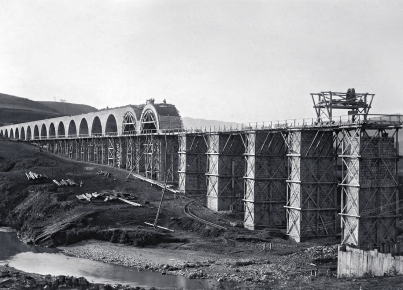
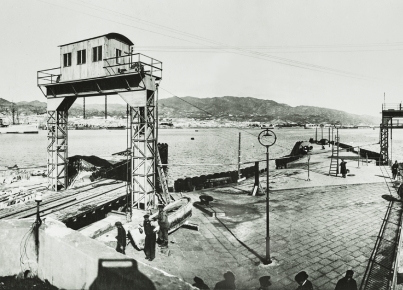
    During the years of the “economic miracle,” it supported infrastructure and industrial development, directly and indirectly financing the construction of Italy’s main electricity, road, rail, and telecommunications networks, as well as investments by local authorities.

    It also contributed to efforts addressing major national emergencies, from the 1951 Polesine flood and the 1963 Vajont disaster to the 1966 Florence flood and the 1968 Belice earthquake.

  • Reorganization and Local Finance

    During the 1970s and 1980s, CDP participated in the restructuring of local government debt and supported investments across the country, broadening the range of projects it financed. 

    It once again intervened in response to natural disasters, such as the 1980 Irpinia earthquake, combining its ordinary activities with the capacity to respond to emergency situations. 

    With the 1983 reform, CDP gained greater financial and accounting autonomy, strengthening its role within the national financial system. 

  • Transformation and Market Opening

    In the 1990s, CDP underwent a period of profound transformation, shaped by European integration policies and the privatization of major state holdings. 

    Following the 1999 reorganization, it expanded its activities, operating directly with public administrations and placing financial instruments on the market. 

    This evolution culminated in 2003 with its transformation into a joint-stock company, with 70% of the share capital held by the Ministry of Economy and Finance and 30% by banking foundations (currently 82.77% Ministry of Economy and Finance and 17.23% banking foundations). This marked its exit from the perimeter of public administration and enabled it to operate as a market investor. 

  • A New Strategic Role

    Following its transformation into a joint-stock company, CDP progressively expanded its scope of action. In 2006, the European Central Bank classified it as a Monetary Financial Institution, aligning it with Europe’s leading promotional institutions.

    In response to the 2008–2009 financial crisis, CDP assumed an increasingly important countercyclical role, supporting SME access to credit, exports, cooperation with developing countries, the enhancement of public real estate assets, and social housing.

    In 2012, the acquisition of SACE (transferred to the Ministry of Economy and Finance in 2022), SIMEST, and Fintecna led to the creation of the CDP Group. CDP also acquired significant stakes in major national companies such as Eni, Poste Italiane, and Terna. This was followed by its commitment to establishing specialized infrastructure funds such as F2i SGR and business-support vehicles such as Fondo Italiano d’Investimento SGR.

    In 2015, CDP became Italy’s Financial Institution for Development Cooperation, supporting public cooperation initiatives in emerging economies.

  • The European Role and Support During the Pandemic

    In 2016, Cassa Depositi e Prestiti became Italy’s National Promotional Institution, expanding its role in supporting the country’s growth and implementing major European and national initiatives, including the Juncker Plan.

    During the Covid-19 pandemic, CDP introduced extraordinary measures to provide tangible support to businesses and public administrations during a period of severe national and international disruption.

    During the same period, its commitment to growth and innovation was strengthened through the launch of CDP Venture Capital, created to support start-ups throughout their development cycle, with a particular focus on high-tech sectors.

  • The National Recovery and Resilience Plan and Impact

    To support economic recovery after the pandemic, CDP contributed to the implementation of Italy’s National Recovery and Resilience Plan (PNRR) through financing activities, measure management, and advisory services to local and central public administrations. It provided technical and financial assistance for project implementation, helping facilitate the effective use of available resources.

    With the Strategic Plan presented in 2021, CDP also integrated an increasing focus on the economic, social, and environmental impact of its activities into its business model.

  • International Expansion and the Development of National Champions
    With the Strategic Plan "Today for the Italy of the future", CDP initiates the creation of a network of international offices, starting with the Belgrade office, to strengthen dialogue with partners and support access to global collaboration opportunities. Furthermore, CDP is entrusted with managing the Italian Climate Fund, a key instrument of the Mattei Plan for Africa.

    CDP Equity invests in national champions such as Angelini Pharma, supporting its transformation into a global operator in the fields of Brain Health and rare diseases, its expansion into the US market, and the scaling up of investments in research and development.

  • 1850–1874
  • 1875–1911
  • 1912–1925
  • 1926–1945
  • 1946–1975
  • 1976–1990
  • 1991–2003
  • 2004–2015
  • 2016–2020
  • 2021–2023
  • 2024–today